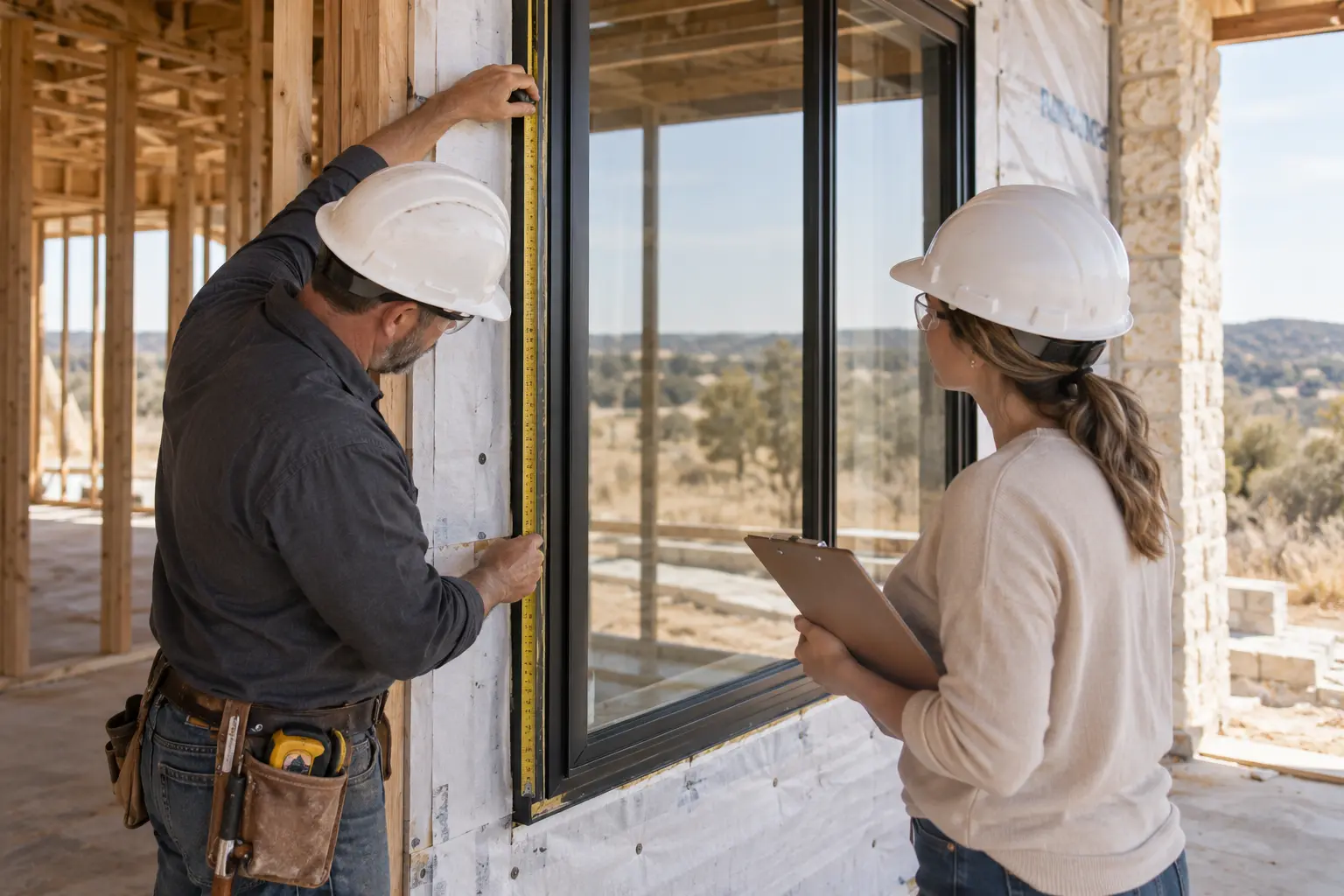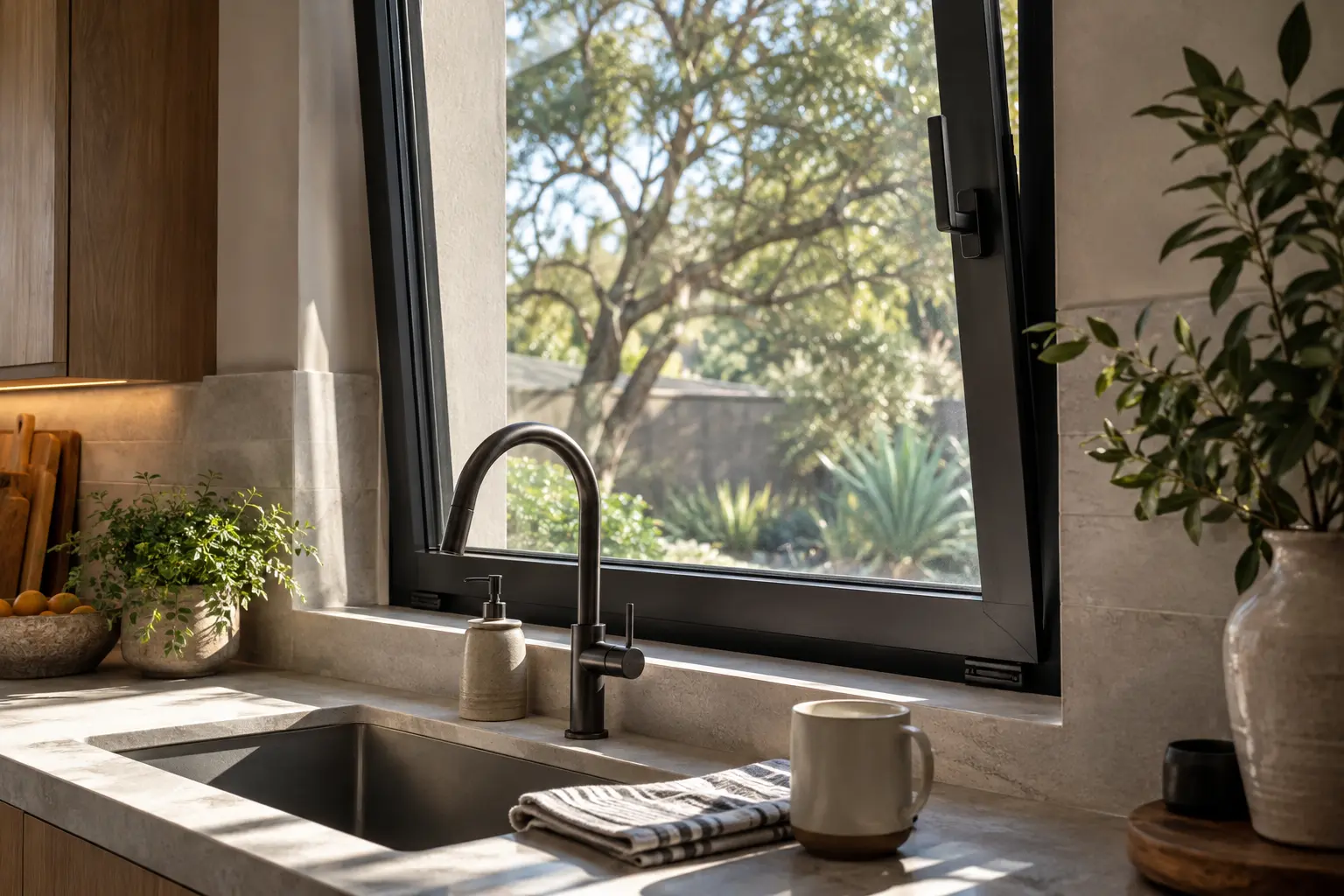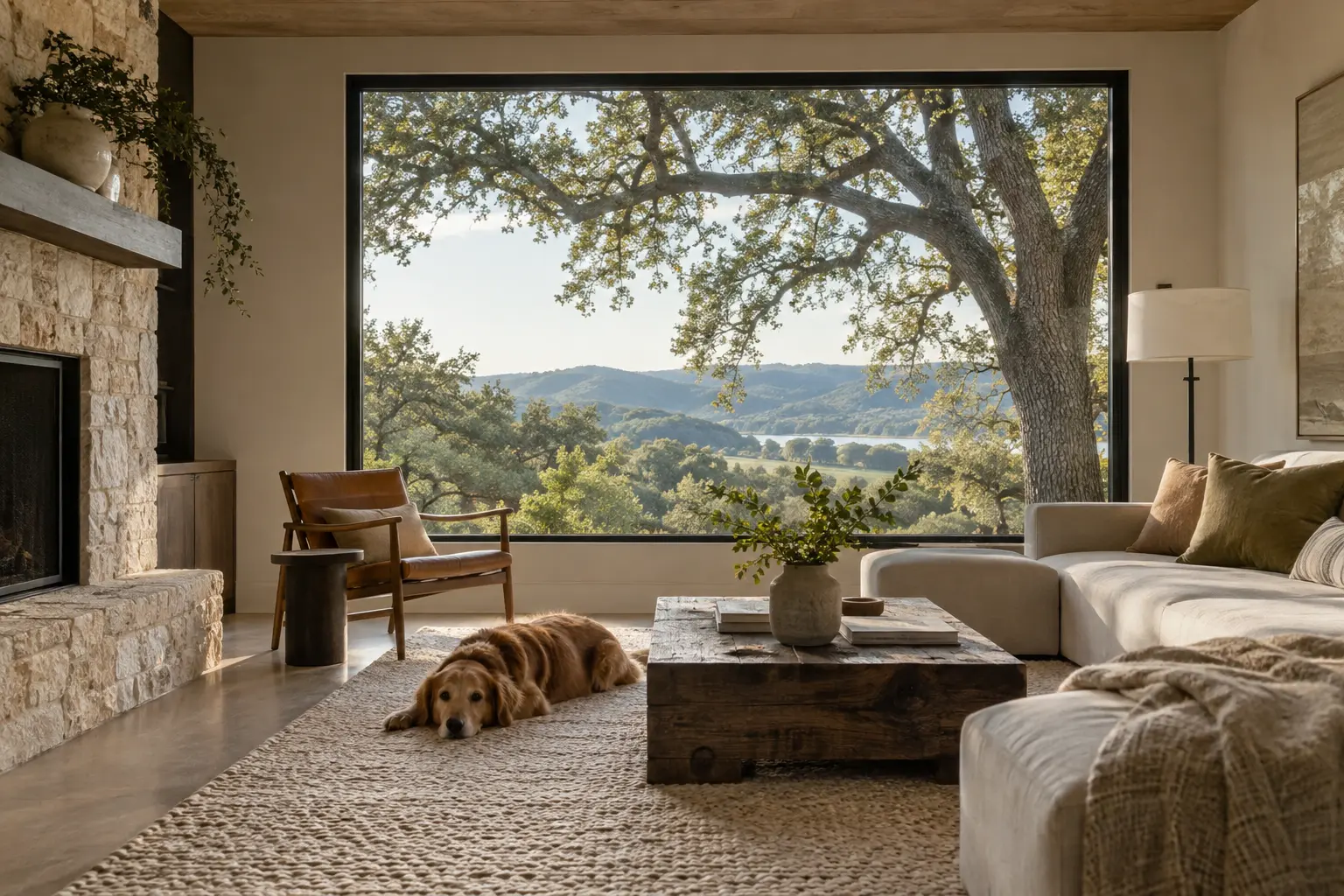
A good picture window gives a room a focal point without making every wall compete for attention. In this Hill Country living room, a black fixed frame brings the oak landscape into the composition. The design begins with the view from the sofa, not the view from the driveway.
Choose the view at seated height
Stand in the room, then sit where the main furniture will be. The sill and head positions affect what remains visible from each position. A wide window might suit a spreading oak, while a taller proportion may frame a tree trunk and canopy. Photograph the view at both heights and include those images with your opening dimensions so the design discussion starts with the room's actual use.
Decide which windows need to open
A fixed window does not open. It can provide a simple visual frame, but it cannot substitute for an opening needed for ventilation or emergency escape. Identify those requirements with the project designer before ordering. Where the design allows, a separate operable window can handle everyday ventilation while the larger fixed unit keeps the principal view visually calm.
Plan the interior around the glass
Consider glare on screens, privacy after dark and access for cleaning. Keep curtain or shade mounting space in the drawing, and avoid placing tall furniture directly across the view you are trying to preserve. Large panes also need an installation and handling plan. Ask the supplier to confirm feasible dimensions, glazing choices and the data for the exact quoted unit.
THE TAKEAWAY
What to keep in mind
The goal is a living room organized around the landscape, with ventilation handled deliberately elsewhere. The final opening size and glass specification must follow the project review.