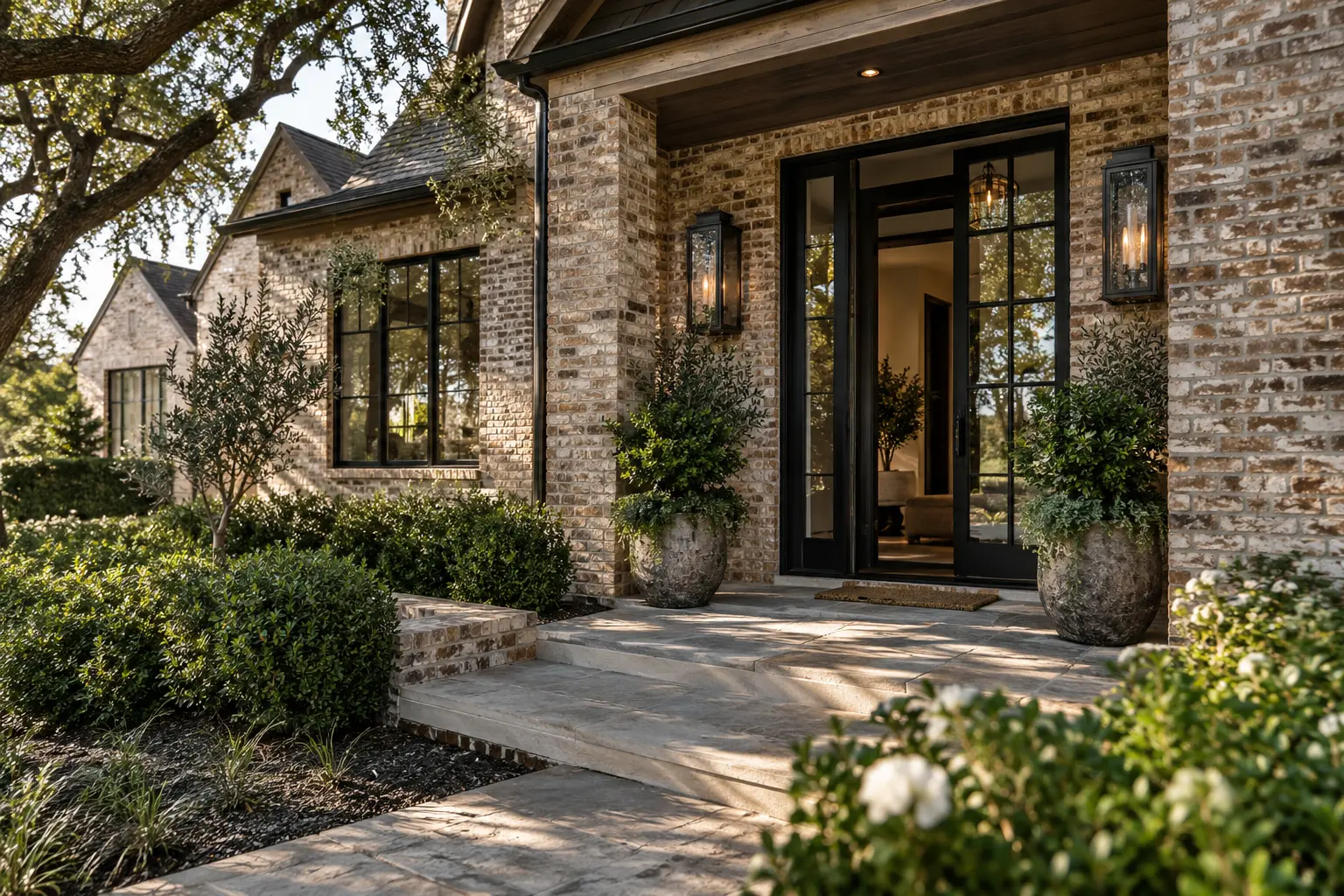
The entry is both the first impression of a house and a place used with shopping bags, guests and deliveries. This Dallas brick home uses a black iron-and-glass door to balance a substantial frame with borrowed daylight. A successful selection needs to feel as useful from inside as it looks from the street.
Check the swing before choosing the pattern
Show the door leaf open on your floor plan. Check its relationship to a console, stair, adjacent wall and exterior landing. For paired doors, identify the everyday active leaf and ask how the second leaf is secured and opened. Record handing in an annotated drawing agreed with the supplier; a phrase such as left opening can be interpreted differently when viewed from opposite sides.
Give privacy the same attention as daylight
Clear glass, obscured glass and exterior screening create different experiences from the sidewalk and the foyer. Think about sightlines in daylight and after interior lights come on. Review a physical glass sample when possible. Decorative divisions should be selected together with the glazing and hardware so the finished entry feels coherent rather than assembled from unrelated choices.
Ask what is included in the quote
Confirm whether the price covers the frame, glass, locks, handles, finish and installation materials. Discuss exposure to weather and the maintenance instructions for the specified finish. Do not infer insulation, security or weather performance from the weight of the door or an image. Request documentation for the exact configuration and have the installation details reviewed for the opening.
THE TAKEAWAY
What to keep in mind
The intended result is a clearly defined entrance with useful light and a practical daily opening.